
Aluminum vs Iron: Which Is More Reliable for Coastal Lighting?
If you are a lighting project contractor specifying fixtures for a coastal or high-humidity project, this article will help you make the right material decision.
Short answer: Aluminum is generally more reliable for coastal areas, but the surface treatment is what really matters. Iron will rust if not protected. Aluminum won't rust, but it can oxidize and corrode if the coating is poor.
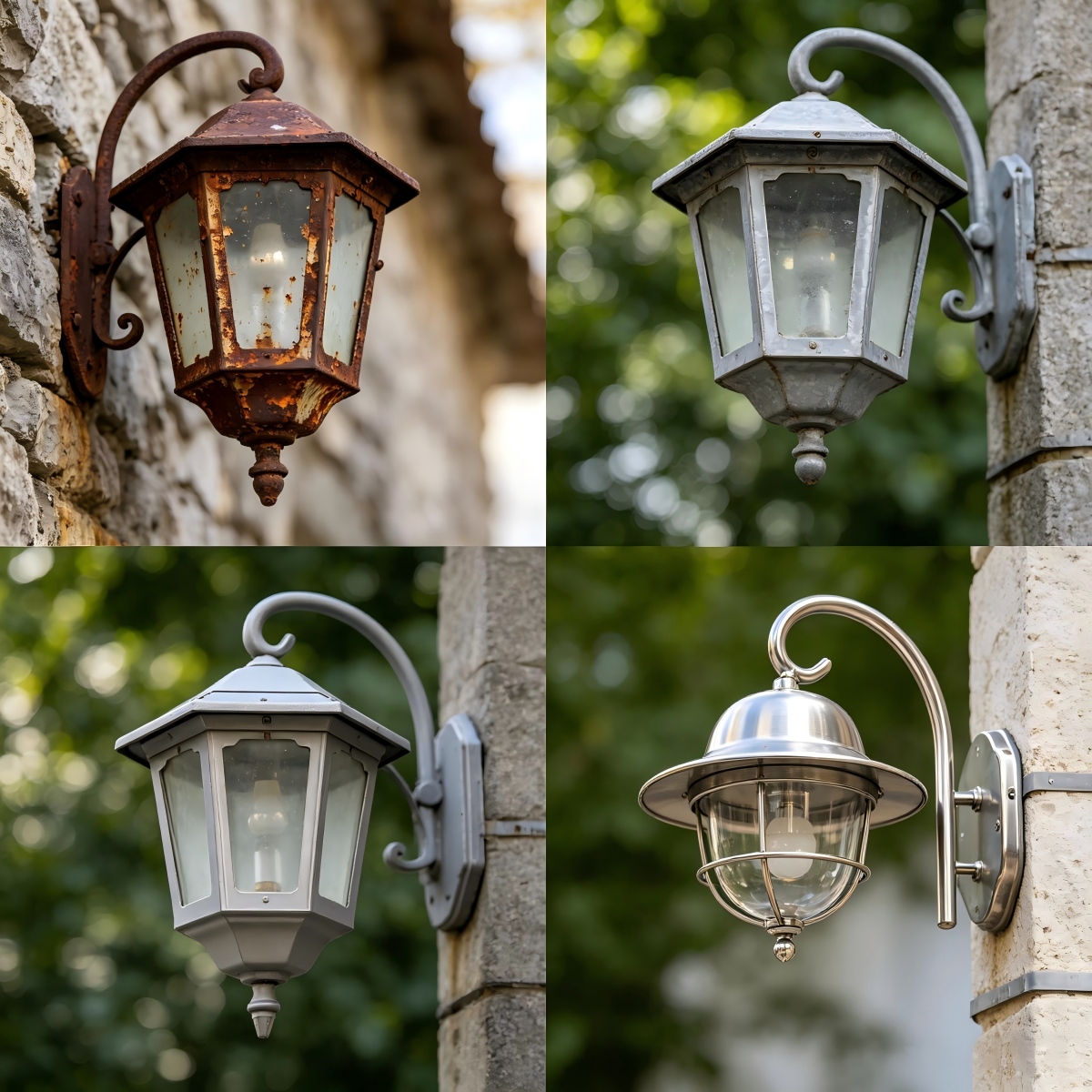
Salt air, high humidity, and UV exposure create a perfect storm for corrosion. The salt in the air forms a thin electrolyte layer on metal surfaces, which accelerates the electrochemical reaction that causes rust. This is why coastal projects fail much faster than inland ones — sometimes within 1–2 years if the material and coating are wrong.
The three enemies of coastal fixtures:
Salt spray – attacks unprotected steel and low-grade aluminum
UV radiation – degrades plastic parts, powder coatings, and seals
Temperature swings – cause expansion and contraction, leading to cracks and water ingress
Iron (or steel) is strong and cost-effective. It is widely used in structural poles and brackets. But in salt air, iron rusts quickly.
What happens to unprotected iron:
Within months, surface rust appears.
Within 1–2 years, rust penetrates the metal, weakening the structure.
Rust stains bleed onto surrounding surfaces, ruining the visual appearance.
If you must use iron, the minimum protection is:
Hot-dip galvanizing (inside and outside) with a minimum zinc layer of 85μm
Plus powder coating with a minimum thickness of 80μm
Even then, any scratch or chip creates a rust point. Once rust starts, it spreads under the coating.
When iron is acceptable: Inland areas, low-humidity environments, or where the structure is not directly exposed to salt spray.
Aluminum doesn't rust (it has no iron content), but it oxidizes when exposed to salt and moisture.
What happens to untreated aluminum:
A white oxide layer forms on the surface.
The surface looks chalky and dull.
Over time, the oxide layer can become powdery and flake off, exposing fresh metal to further corrosion.
What aluminum needs:
Marine-grade alloy (e.g., 6061 or 6063)
Powder coating or anodizing with a minimum thickness of 60–80μm
Proper pretreatment before coating (chromate conversion or equivalent)
All cut edges and drilled holes must be treated or coated.
When aluminum is acceptable: With proper coating, aluminum can perform well in coastal areas — but it requires strict quality control. A cheap powder coating (below 60μm) will fail within 2–3 years.
| Material | Upfront Cost | Expected Lifespan in Coastal Areas | Maintenance Cost |
|---|---|---|---|
| Unprotected iron | Low | 1–2 years | High (frequent replacement) |
| Galvanized + powder-coated steel | Medium | 5–8 years | Medium (touch-ups needed) |
| Powder-coated aluminum | Medium–High | 8–12 years | Low |
| 316 stainless steel | High | 15–20+ years | Very low |
Note: These lifespans assume proper installation and correct coating thickness. A cheap coating will shorten any material's lifespan dramatically.
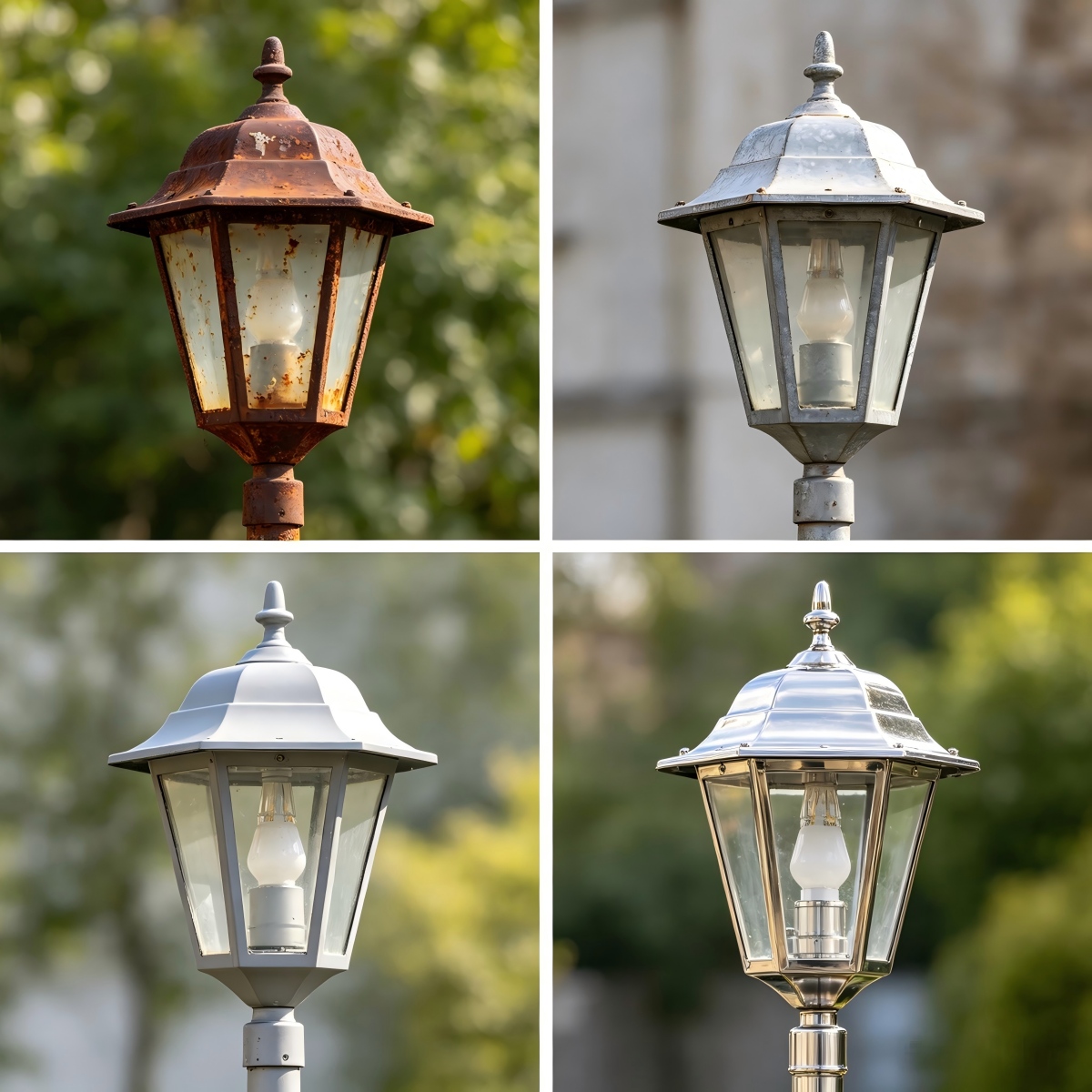
Best option: 316 stainless steel. It contains molybdenum, which gives it superior resistance to chloride (salt) corrosion. For extreme marine environments (direct seafront, marinas), use 316L (low-carbon version) for better weldability.
If budget requires aluminum or steel:
| Material | Specification |
|---|---|
| Aluminum | Marine-grade alloy (6061/6063) + 80μm powder coating + chromate pretreatment |
| Steel | 3mm wall + hot-dip galvanized inside/out (85μm) + 80μm powder coating |
Do not compromise on:
Coating thickness
Pretreatment quality
Cut-edge protection
Fastener material (use stainless steel fasteners, not zinc-plated)
| Your Project | Recommended Material | Coating Requirement |
|---|---|---|
| Direct seafront / marine | 316 / 316L stainless steel | None needed |
| Coastal within 1km of sea | 316 stainless steel | None needed |
| Coastal within 5km of sea | Aluminum or galvanized steel | 80μm powder coating + pretreatment |
| Inland / low humidity | Aluminum or powder-coated steel | 60μm powder coating |
Q: Can I use 304 stainless steel near the coast?
A: For short-term or low-exposure areas, maybe. But within 1km of the sea, 304 will likely show rust spots within 1–3 years. We recommend 316 for anything coastal.
Q: What about "marine-grade" aluminum?
A: The term is often misused. The key is the alloy grade (6061 or 6063) and the coating thickness. Ask your supplier for the actual alloy and coating spec.
Q: How do I verify coating thickness?
A: Ask for a coating thickness test report. A reputable supplier will provide this. If they can't, don't trust the coating.
Q: What fasteners should I use?
A: Always use stainless steel fasteners (304 or 316). Zinc-plated or plain steel fasteners will rust quickly and stain the fixture.
[Contact us] for a free comparison sheet with coating specs and material recommendations based on your project location.
Contact: Pearl Peng
Phone: +86-13925312260
E-mail: sales@customlightings.com
Whatsapp:+8613925312260
Add: 5F Block A No.14 North ZhiAn Road JunAn Town Shunde Foshan Guangdong China


